 spotongaragedoor@gmail.com
 (916) 501-6362


Start with the direct answer
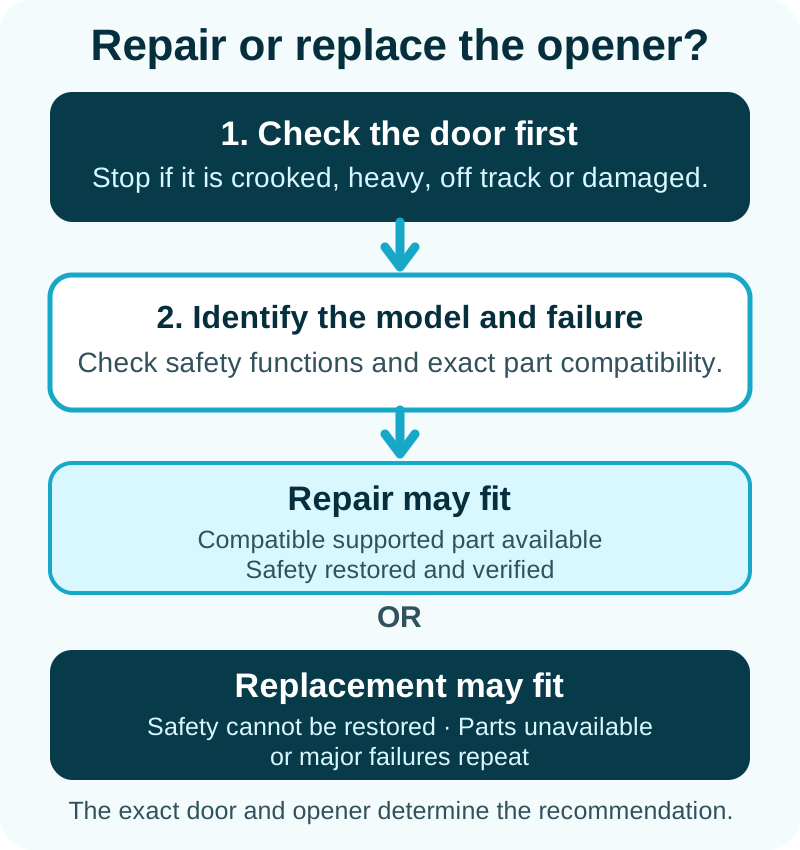
Repair usually makes sense when the problem can be traced to one compatible, available component and the opener still operates the door safely. Replacement is more practical when the unit cannot provide reliable reversal protection, its required parts are no longer supported, failures keep returning, or the opener and rail are a poor match for the door.
The decision should follow a diagnosis, not the sound of the motor alone. A heavy, binding or damaged door can make a healthy opener appear weak. Replacing the opener without correcting the door problem can leave the new unit under the same strain.
Repair may be reasonable
The model is identifiable, the needed part is listed as compatible, the rail and powerhead are sound, required safety functions pass the model's prescribed tests, and the door itself moves correctly.
Replacement may be better
Required safety protection cannot be restored, essential parts are unavailable, the powerhead or rail has substantial damage, failures repeat, or the installation no longer suits the door and desired controls.
Separate a door problem from an opener problem
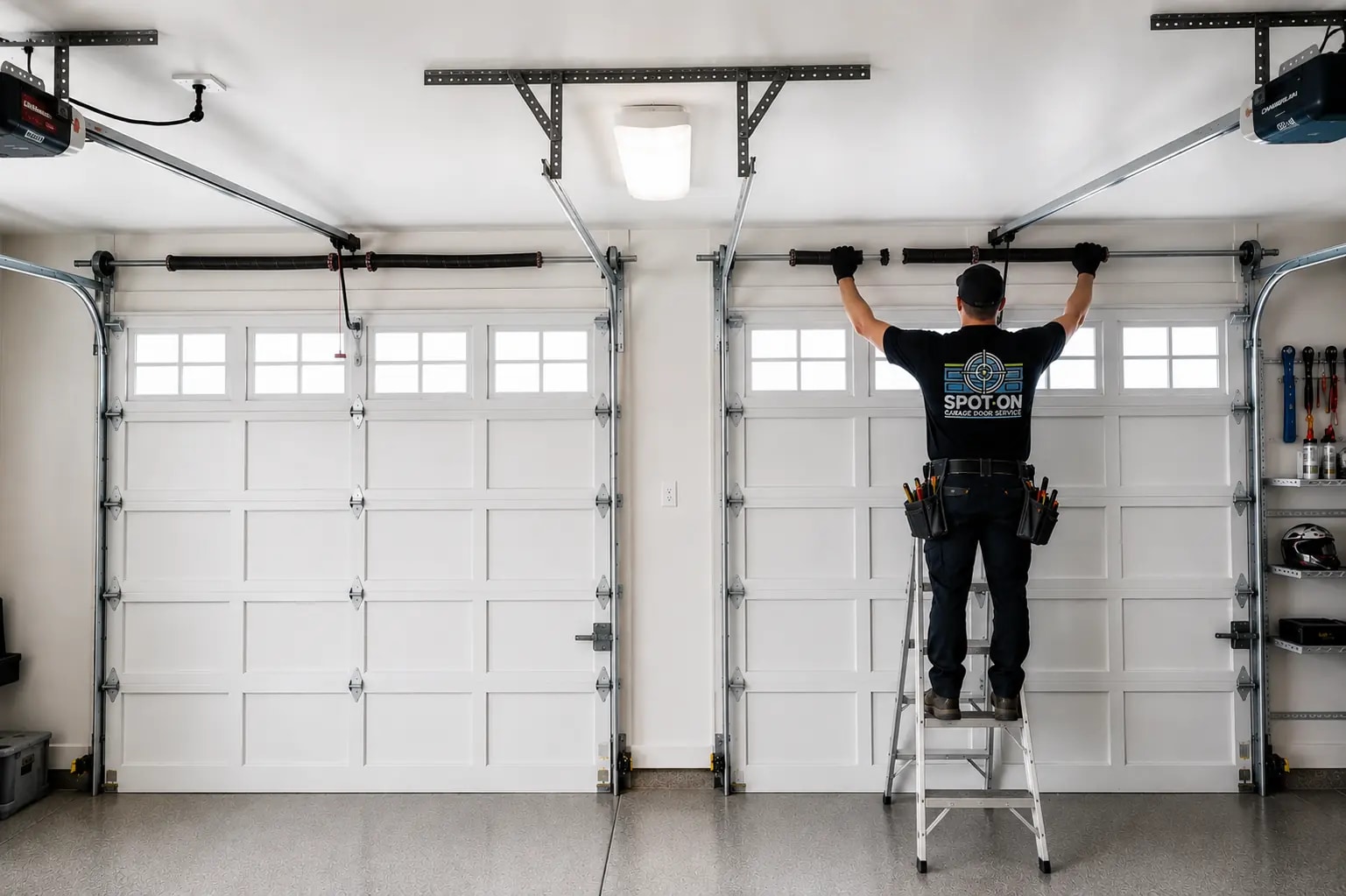
The opener moves the door, but the springs carry most of the door's weight. Rollers, hinges, tracks and cables guide and support each cycle. If the door is crooked, unusually heavy, off track or visibly damaged, stop using it and keep clear. Do not increase opener force to push through resistance.
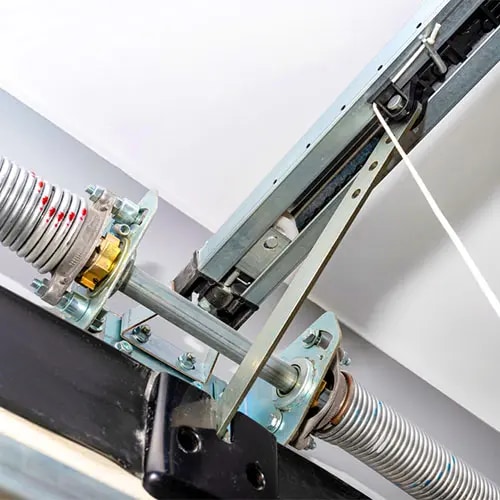
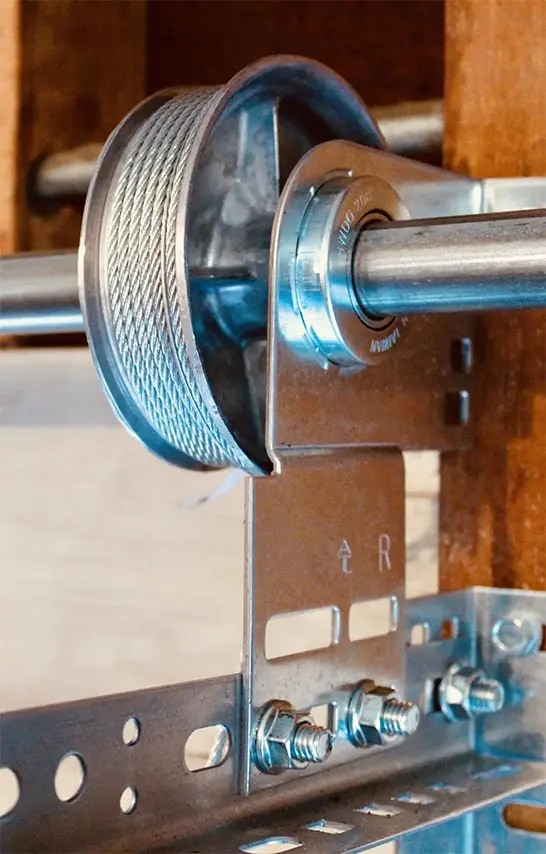
A technician can inspect the door and opener as connected systems. The check should note whether the door stays level, whether the lifting hardware is intact, where movement becomes difficult and whether the opener rail, trolley and door arm remain secure. Springs, cables, drums and bottom brackets should not be adjusted as a homeowner test.
Problems that may allow a focused opener repair
A remote, wall control, safety sensor, trolley, gear, belt, chain, wiring connection or logic board can sometimes be serviced without replacing the complete opener. That depends on the confirmed failure, the exact model and whether the manufacturer still lists a suitable part. Similar-looking parts are not automatically interchangeable.
LiftMaster directs owners to identify the model and use the matching parts information; its catalog includes model-specific logic boards, gear kits, sensors, belts, chains and electrical components. A professional diagnosis is especially useful when a symptom could come from more than one source, such as a door that reverses, stops partway or works only from one control.
Safety can make replacement the right answer
A closing door needs working entrapment protection and must pass the test procedure in its owner's manual. The U.S. Consumer Product Safety Commission advises repair or replacement for an automatic opener that does not reverse properly. If the safety sensors are missing, defeated or unreliable, stop automatic closing until the system is professionally evaluated.
Do not bypass the photo eyes, hold a control to defeat normal operation or raise the force setting to overcome a failed safety test. If a model cannot be returned to safe operation with supported parts and correct installation, replacing it is more appropriate than extending the life of an unsafe system.
Check compatibility before ordering a part or accessory
Photograph the opener model label and note the door height, drive type, rail style, wall control, remotes and safety sensors. Compatibility can depend on the product family and manufacturing generation. Chamberlain Group, for example, tells owners to use its compatibility resources for remotes, keypads and smart-control accessories instead of choosing by appearance.
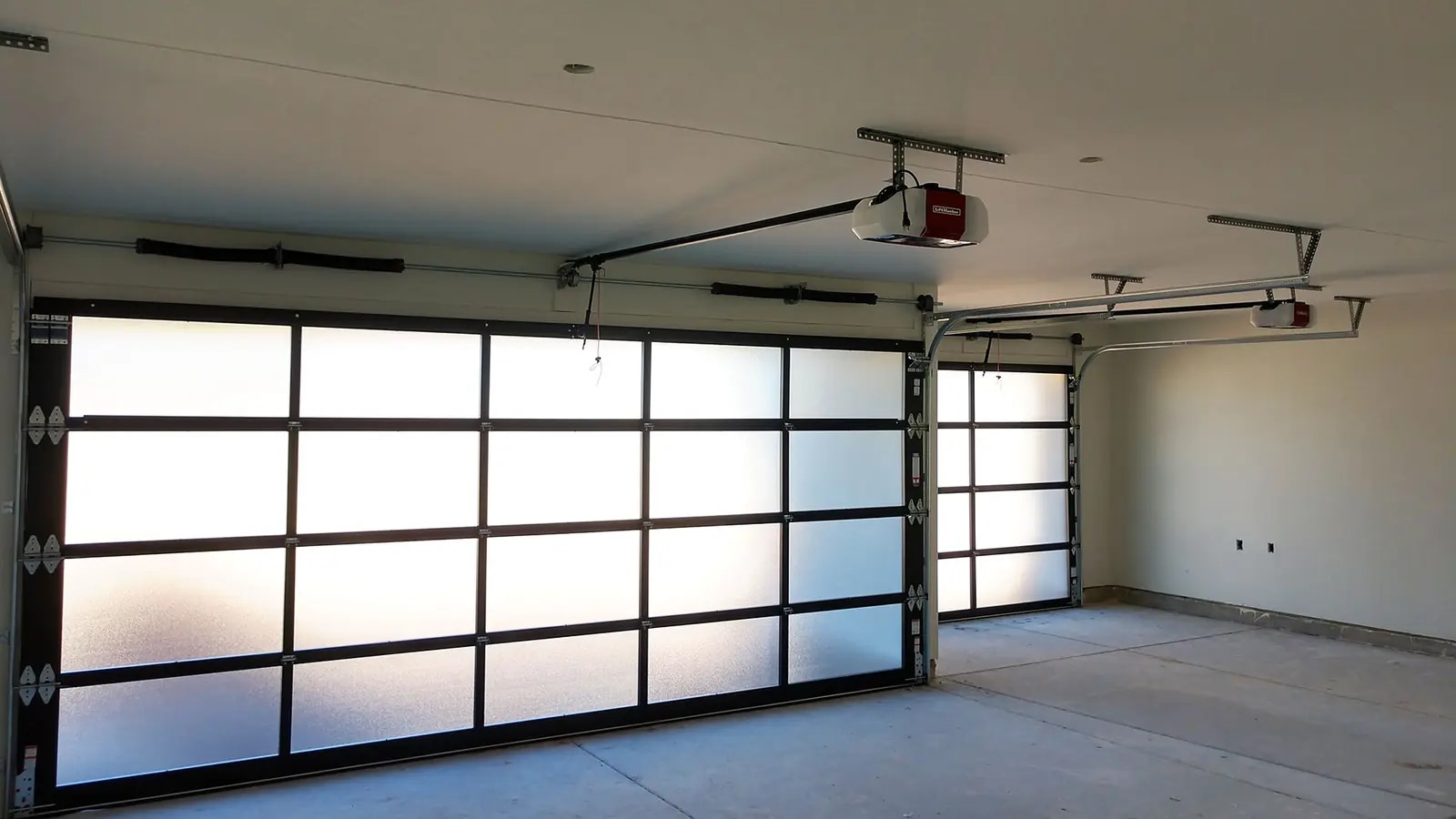
A replacement opener also needs a rail and drive sized for the door height, secure mounting, a correct door-arm connection and working safety sensors. Desired features such as quieter belt drive, battery backup, lighting or connected controls can influence the choice, but they do not replace the basic door and safety inspection.
What a documented Rocklin project shows
A published Spot On Garage Door project in Rocklin records an opener installation and new garage door springs completed on August 7, 2026. The record supports only those completed services; it does not identify the prior failure, opener model or the reason each item was selected.
It is still a useful example of why the opener and lifting system should be considered together. New opener equipment cannot compensate for a spring problem, and spring work does not diagnose an electrical or control problem. The recommended scope should follow what is actually found at the door.
Prepare for an opener service visit
From a safe position, record what each control does, where the door stops, any light or diagnostic pattern and whether the symptom is constant or intermittent. Include a clear photo of the model label and a wide photo showing the opener, rail and top of the door. Do not remove covers or touch loaded door hardware for a photo.
Call (916) 501-6362 or use the service request form for Rocklin and nearby service areas. Spot On Garage Door can inspect the door and opener, explain whether a supported repair is practical, and discuss replacement when safety, compatibility or repeated failures make that the better option.